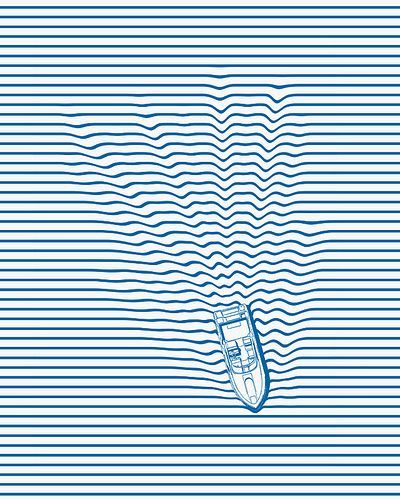
I believe art has three defining qualities. (i) It creates tension and contrast. (ii) It thrives on ambiguity, which grows from many subtle bisociations, the “perceiving of a situation or idea in two self-consistent but habitually incompatible frames of reference” [1: The Act of Creation]. (iii) It is a language for the viewer as much as for the artist, so the meaning a viewer builds while interpreting a work becomes part of the work itself. Whether or not viewers can sense the artist’s intent, good art leaves them room to form new images and bisociations of their own. In general, when I think about creating art, I hope my work does just that.
My second project, NeurAxis, which was later exhibited at Ars Electronica, began with a simple curiosity about the mind. Everything that makes us who we are takes shape in the brain, yet the organ itself stays hidden. We speak of wearing our heart on our sleeve, and NeurAxis lets a person wear their mind. It invites a conversation between the body and the brain, and a quiet meditation on embodiment and identity.
My third project, Endwalker, is most naturally read as (1) an existential work. For centuries, water has worn the Taihu stone away grain by grain, yet the stone remains, proving its existence by nothing more than continuing to exist. In this, it resembles Sisyphus, who pushes his boulder up the mountain only to watch it roll back down, and whom Camus nonetheless asks us to imagine happy [2: The Myth of Sisyphus]. The same erosion that hollows the stone points to a second reading, one about (2) entropy.
Most of us first encounter entropy through the second law of thermodynamics, which tells us that the entropy of an isolated system never decreases. This is why time seems to flow in only one direction. The word, however, has a second home in information theory, the mathematical study of how information is measured, stored, and communicated [3: A Mathematical Theory of Communication]. There, the information carried by an outcome x with probability p(x) is defined as I(x) = −log p(x). The definition captures an intuition we already share. The less likely an event, the more it surprises us, and the more we learn when it happens. Entropy is then the information we expect to receive on average, H(X) = −Σ p(x) log p(x). It is highest when every outcome is equally likely, which is exactly when we are least sure what will happen. In other words, entropy measures uncertainty. Seen this way, it also describes exploration, which is why reinforcement learning agents are often encouraged to keep their entropy high [4: Soft Actor-Critic]. It describes ambiguity too, the very quality I believe art thrives on.
If we look a little closer, the stone has even more to say about time itself. I would like to walk through three ways of seeing it. The first is (i) the arrow of rising entropy, which runs from cause to effect. The second is (ii) the panorama, which takes in all of time at once. The third is (iii) the reversed arrow of falling entropy, which runs from effect back to cause.
(i) The arrow of rising entropy
The first view is the one we know best. Entropy rises, time flows forward, and every effect has its cause somewhere in the past. Laplace gave this view its most famous form when he wrote that “we ought then to regard the present state of the universe as the effect of its anterior state and as the cause of the one which is to follow” [5: A Philosophical Essay on Probabilities]. Followed to its end, however, this arrow leads somewhere bleak. As far as our senses can tell, it cannot be reversed, and if we judged meaning by where it finally lands, at the end of time, everything would seem to amount to nothing. Yet things plainly do exist. I exist, here, in this moment, and that is sufficient in itself.
(ii) The panorama
This is where the second view comes in. Life becomes far richer once we stop seeing time as an arrow and start seeing it as a series of slices, or as a single panorama taken in all at once, the way the heptapods experience it in Ted Chiang’s “Story of Your Life” [6: Story of Your Life].
But if all of time is already laid out, why can’t we see it? The answer depends on how we think of the brain. We can picture it as a container that experience slowly fills, what Locke called the “yet empty cabinet” [7: An Essay Concerning Human Understanding]. Or we can picture it as a filter. Huxley described the brain as a “reducing valve” that narrows the vastness of “Mind at Large” down to what we need to survive [8: The Doors of Perception]. The entropic brain hypothesis later tied the loosening of this filter to a rise in the brain’s entropy [9: The Entropic Brain]. Because the filter discards so much, we only ever glimpse part of the panorama, and so the future appears to us as a probabilistic model. Laplace, the same thinker who pictured a perfectly determined universe, saw this clearly. He wrote that probability is “relative, in part to this ignorance, in part to our knowledge” [5: A Philosophical Essay on Probabilities].
A side note: You might suspect that the panorama leads to fatalism, where everything is already decided. Well, it turns out that it doesn’t, because a fixed future is not the same as a knowable one. A recent study in Nature Communications shows that a simple deterministic system, with no chaos or randomness at all, can still be impossible to predict from its starting point [10: Predictability Can Be Dynamically Constructed in Deterministic Systems]. Its initial state does fix a single outcome. Yet that outcome remains, in effect, unwritten, because the language needed to write it has not yet been invented. Its vocabulary of vortices, loops, and winding fields is created by the dynamics along the way, and until those words appear, even the most powerful algorithm has nothing to read.
(iii) The reversed arrow of falling entropy
The third view turns the arrow of time around. Before we dig into it, let me first introduce Fermat’s principle. Imagine light travelling from point A in the air to point B underwater. You might expect it to follow the straight line between them. Instead, it bends at the surface, taking the path that requires the least time [11: The Feynman Lectures on Physics]. The reason is that light moves more slowly in water. The straight line, with its longer stretch underwater, would take longer than the bent path, which crosses more of the air and less of the water. What is strange is that the light seems to know this before it sets out. It does not try every route and compare them. It takes the right one from the start, as though it already knew it was headed for B. Chiang builds his whole story on this unsettling idea [6: Story of Your Life].
If our fate is written in the same way, does choosing still mean anything? Well, I think it means more. When I decide to climb a mountain, a version of me standing at the summit comes into being, one more universe among countless possible ones. Every step I take narrows those universes, and my uncertainty falls with them, until only that one remains. And why do I climb at all? Because I can see the self at the summit, and it pulls me upward. The cause now lies in the future, and time runs from effect back to cause. In this view, free will finally has work to do.
Where I go matters less than whether I am the one who chooses. If I do not choose, someone else will, and their future becomes my reality. More often than not, that someone is society itself. Without noticing, we follow the script of an intersubjective reality, a set of shared beliefs that exist only because enough people hold them [12: Sapiens], and that quietly define what an optimal life looks like. Marry and have children by a certain age. Buy more to be happier. When we never ask what we truly want, these defaults become our reality.
So what do I want free will for? I want to use it to create as many parallel universes, as many possibilities, as I can. The more possibilities there are, the more information my life holds, and the higher its entropy climbs before it finally settles into the distribution I hope for. If our universe is a simulation [13: Are You Living in a Computer Simulation?], a probabilistic model that needs countless rollouts, I hope that simulating my life costs it a little extra computation. To me, this way of seeing time is a poetic longing for a life lived densely.
By now, it seems fair to say that how we perceive time is bound up with how we perceive existence, and that both are bounded by the brain. Having followed Endwalker this far, we can return to NeurAxis with fresh eyes.
The brain is a complex system. It can create a vast number of patterns by recombining pieces of old ones, so the whole becomes more than the sum of its parts. The more information a system can manage by reconfiguring itself, the more complex it is [14: Seven and a Half Lessons About the Brain]. “If human brain evolution has a crowning achievement, it is the complexity of its crown.” Such complexity makes the brain hard to grasp at the level of neurons. From a higher level, however, it can be viewed through the Multiple Drafts model [15: Consciousness Explained]. In this model, there is no central stage where everything comes together for an inner audience. Instead, many parallel processes continually write and revise drafts of experience, and what we call consciousness is whichever drafts come to dominate, arising from the complexity of the substrate itself.
Consciousness puzzles us as much as it fascinates us. Some bolder thinkers propose that the purpose of existence or life is to give rise to consciousness, or to ever higher forms of it. Thomas Campbell, for example, bridges physics and consciousness by treating consciousness as fundamental and using it to explain physics, and he describes its evolution as a process of lowering entropy [16: My Big TOE]. These ideas remain speculative and lack broad scientific agreement, but they are fascinating conceptually, and they are much of what draws me to the brain.
With NeurAxis, I wanted to leave some of these questions to the viewer. Physicists distinguish the observable universe from the unobservable one. When we think, is the brain an observable universe? Can consciousness itself be observed? If it is a probabilistic model built from multiple drafts, does it collapse the moment we observe it, and would we feel the collapse? And once the mind is worn outside the body, has its consciousness reached its end, and has its time stopped flowing?
Of course, I have written at length about my own thinking as the artist, and no viewer will, or should, sense all of these subtleties. In fact, the point of art is that the viewer should not think about a work the way its creator does. Art is, in part, a deliberate blank space, a purposeful miscommunication. It lies in what is shown and also in what is left unsaid. Each brain is a different container and a different filter, so every artwork is, in essence, a projection. Yet every projection is itself a piece of consciousness, created by human consciousness. When we gaze into the brain or mind, the brain or mind also gazes into us [17: Beyond Good and Evil], and this is what makes art interesting.
References
[1] Koestler, A. (1964). The Act of Creation. Hutchinson.
[2] Camus, A. (1955). The Myth of Sisyphus and Other Essays (J. O’Brien, Trans.). Knopf. (Original work published 1942)
[3] Shannon, C. E. (1948). A mathematical theory of communication. Bell System Technical Journal, 27(3), 379–423.
[4] Haarnoja, T., Zhou, A., Abbeel, P., & Levine, S. (2018). Soft actor-critic: Off-policy maximum entropy deep reinforcement learning with a stochastic actor. Proceedings of the 35th International Conference on Machine Learning, 1861–1870.
[5] Laplace, P.-S. (1902). A Philosophical Essay on Probabilities (F. W. Truscott & F. L. Emory, Trans.). Wiley. (Original work published 1814)
[6] Chiang, T. (2002). Story of your life. In Stories of Your Life and Others. Tor.
[7] Locke, J. (1690). An Essay Concerning Human Understanding. Thomas Basset.
[8] Huxley, A. (1954). The Doors of Perception. Harper & Brothers.
[9] Carhart-Harris, R. L., Leech, R., Hellyer, P. J., Shanahan, M., Feilding, A., Tagliazucchi, E., Chialvo, D. R., & Nutt, D. (2014). The entropic brain: A theory of conscious states informed by neuroimaging research with psychedelic drugs. Frontiers in Human Neuroscience, 8, 20.
[10] Koopmans, L., Kay, E. M., & Youk, H. (2026). Predictability can be dynamically constructed in deterministic systems. Nature Communications. https://doi.org/10.1038/s41467-026-77737-0
[11] Feynman, R. P., Leighton, R. B., & Sands, M. (1963). The Feynman Lectures on Physics (Vol. I, Ch. 26). Addison-Wesley.
[12] Harari, Y. N. (2015). Sapiens: A Brief History of Humankind. Harper.
[13] Bostrom, N. (2003). Are you living in a computer simulation? Philosophical Quarterly, 53(211), 243–255.
[14] Barrett, L. F. (2020). Seven and a Half Lessons About the Brain. Houghton Mifflin Harcourt.
[15] Dennett, D. C. (1991). Consciousness Explained. Little, Brown.
[16] Campbell, T. (2003). My Big TOE. Lightning Strike Books.
[17] Nietzsche, F. (1966). Beyond Good and Evil (W. Kaufmann, Trans.). Vintage. (Original work published 1886)